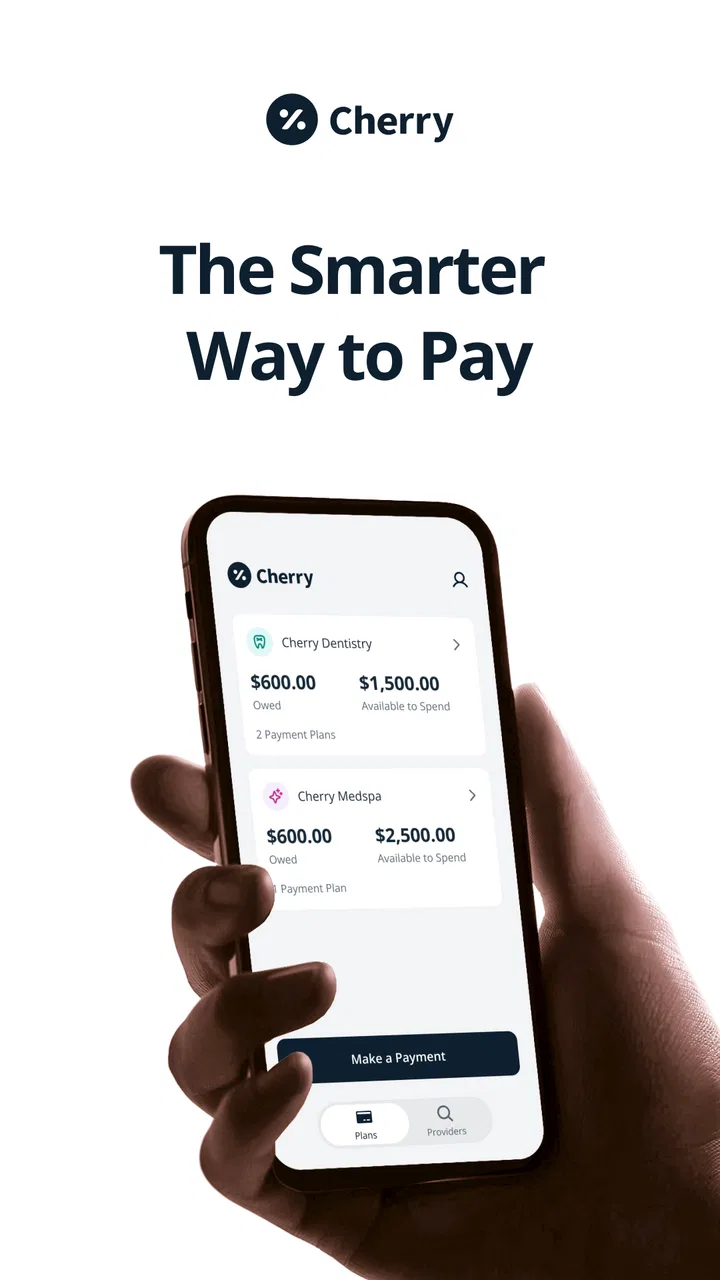
Cherry: The Smarter Way to Pay
- 4.5
- Rating
- 100.00K
- Installs
- Free
- Price

 Analysis by App-foxy
Paying for a plan is rarely difficult because of the payment itself. The harder part is often keeping track of what is due, remembering the schedule, and finding a manageable way to stay organized when money is tight or attention is divided. Cherry: The Smarter Way to Pay approaches that problem as a finance app focused on managing plans and paying according to a schedule. After spending time with it, I found its strongest appeal is not flashy budgeting advice, but the possibility of making a specific payment routine easier to follow.
I would describe Cherry as a focused tool rather than a complete money-management center. That distinction matters. It may suit someone who wants a clearer place to handle an existing plan, while a person looking for detailed spending analysis, investment tools, or a broad household budget may prefer a more comprehensive finance app. Its free price makes it easy to try, and the Everyone age rating gives it a broad audience, but ease of access is not the same as suitability for every financial situation.
How Cherry feels to use in everyday payment planning
I find Cherry most useful when I treat payment planning as a small, repeatable check-in rather than something to handle in a rush. That approach makes it easier to notice whether a plan still fits alongside everyday expenses, instead of focusing only on the next scheduled payment. From there, the key question is how to turn that focused view into a routine that works on an ordinary, busy day.
You May Also Like

 Blood Strike: 2.5 Anniversary
Blood Strike’s Loadouts Turn Every Drop Into a Tactical Gamble
A close look at Blood Strike’s custom loadouts: how fast access to signature weapons reshapes its battle royale rhythm, rewards preparation, and narrows the gap between fights.

 Pandora - Music & Podcasts
Pandora’s Music Is Easy to Start, but Harder to Recover
Pandora’s strength is its low-effort path from a seed to a station. Its weak spot is how much confidence it asks you to place in connection, setup, and quiet recovery.

 8 Ball Pool
 Is Built on Rivalries, Rematches, and Routine
A close look at the rivalries, rematches, shared routines, and unanswered safety questions that turn a quick pool match into a persistent mobile community.

 Samsung Music
’s Quiet Strength Is Playing What You Already Own
Its reach comes less from spectacle than from dependable access to a personal library. That simplicity is both the app’s strongest retention engine and its ceiling.

 AccuWeather: Weather Radar
AccuWeather Review: A Quick, Clear Forecast for Everyday Decisions
For everyday plans, the best forecast is the one you can understand quickly. AccuWeather makes rain timing, radar, and local conditions easy to act on, with a few trade-offs.

 Hill Climb Racing
Why Hill Climb Racing Still Turns Crashes Into One More Run
A tiny car, a bumpy hill and one more upgrade: Hill Climb Racing keeps resurfacing because its simple chaos makes every near-miss feel personal.
More From Our News Desk



Readability and navigation are central to the experience
The most important question for an app like this is whether I can understand what needs attention without working through a maze of screens. Cherry’s purpose gives it a useful advantage: the experience is built around plans and scheduled payments, so the basic mental model is more direct than the one found in a full banking or budgeting application. I can approach it with a practical question: what plan am I managing, and what payment should I deal with next?
That focused structure can be especially helpful for people who become overwhelmed by dashboards packed with charts, categories, promotional panels, and unrelated account information. Someone with limited financial experience may find a plan-based approach easier to understand than a traditional budget app that expects them to classify every purchase. I also see value for users who prefer completing one concrete task at a time rather than reviewing their entire financial life in a single session.
At the same time, a focused interface places more importance on wording. Financial screens need to make the difference between a plan, a scheduled payment, and a completed payment immediately clear. If those concepts are presented too similarly, a user can feel uncertain even when the design looks clean. My practical advice is to slow down during the first setup and read each confirmation carefully rather than assuming the next screen means the same thing as the previous one.
Cherry is developed by Cherry Technologies, Inc., and the current version is 1.2.1. That relatively early version context makes me approach it as a product that should be judged by how understandable its core workflow is, not by how many secondary tools it includes. A simple app can be more useful than a crowded one, but only when its primary actions are unmistakable.
Useful for people who need a repeatable routine
A realistic everyday example is a person managing a planned purchase while working irregular hours. They may not want to open a conventional banking app, search through transactions, and calculate what remains. Instead, they need a quick way to revisit the plan, see the schedule, and act when the timing is right. Cherry’s concept fits that moment well because it keeps the user’s attention on an agreed payment path instead of turning the task into a general finance review.
Another useful situation is a household where one person handles the purchasing decision and another checks the payment calendar. In that case, the app can serve as a shared reference point for the plan itself, provided both people are comfortable interpreting the same information. I would still recommend discussing the schedule outside the app, especially when a payment affects essential expenses. A clear screen should support a financial decision, not replace one.
One non-obvious benefit of a plan-centered workflow is that it can reduce the temptation to treat available money as completely free money. When a future payment is kept visible as part of an active commitment, the user has a better chance of remembering that a purchase continues beyond the moment of checkout. That is a behavioral advantage, even though it is not the same as a full budgeting system.
Motor and sensory considerations in real use
For users with motor limitations, the quality of a finance app depends on more than attractive layout. Payment-related actions should be easy to reach without requiring fast taps, delicate gestures, or repeated navigation. Cherry is most comfortable for someone who can use ordinary touch controls at a steady pace, but I would not assume that every user will find the interaction equally effortless. A person with tremors, reduced dexterity, or fatigue should test the complete plan and payment flow before relying on it for an important deadline.
There is also a practical difference between reading a plan at home and reading it while moving through a busy day. Small text, dense summaries, or weak contrast can become a problem in bright light, on a small screen, or when the user is tired. I found that the best way to use an app with financial consequences is to review the details in a calm setting, then return later for a short confirmation. This two-step habit reduces the chance of making a rushed choice simply because the phone is being used in an inconvenient environment.
People with sensory sensitivities may prefer a quiet, predictable finance workflow. Cherry’s narrow purpose can help here because it does not require the user to process every type of financial information at once. However, predictability also depends on clear feedback after an action. Whenever a payment or schedule change is involved, I would look for an unmistakable confirmation and keep a personal note of the expected date. That is not distrust of the app; it is a sensible safeguard for any financial tool.
Users who rely on larger text, screen readers, voice control, or other device-level assistance should check how the app behaves with their preferred settings before committing to a plan. I would avoid promising a particular accessibility experience without testing it on the person’s own phone. The most inclusive approach is to treat the device’s accessibility settings as part of the review process, not as an afterthought.
Situational access: when the focused design helps most
Cherry makes the most sense when the user already knows why they are opening it. If I need to review a plan, check its schedule, or organize an upcoming payment, a dedicated finance app can be less distracting than a general bank application. This is particularly useful for people who have trouble maintaining attention across several financial tasks. The app gives them a narrower job, which can make the session feel more manageable.
It may also help users who do not want to build a detailed budget. Many budgeting tools are powerful but ask for ongoing categorization, account linking, and regular analysis. That level of commitment can be unsuitable for someone who only needs to manage a particular payment arrangement. Cherry’s free availability lowers the barrier to testing whether this more limited workflow fits, without requiring a purchase simply to explore the basic experience.
The app has a different value for users with inconsistent schedules. A fixed routine such as checking finances every Friday may not work for a person whose shifts change each week. In that case, I would use the plan as a visual reminder but pair it with a calendar alert or a written note. The trade-off is important: Cherry can organize the payment plan, but the user should not depend on one app alone if missing a date would create serious difficulty.
Its broad age classification, Everyone, suggests that the product is intended for general audiences rather than a narrowly restricted group. Still, financial maturity varies widely. A younger user may understand the interface but not the long-term effect of committing to a payment schedule. I would encourage a parent, guardian, or trusted adult to discuss the plan when appropriate. Clear navigation can make a financial commitment easier to complete, which is helpful only when the commitment itself is understood.
Where Cherry is less suitable than familiar alternatives
The strongest comparison is with a regular banking app. A bank app usually provides a wider view of balances, transactions, transfers, and account activity. Cherry’s plan-oriented purpose can be easier to follow, but it should not be treated as a replacement for checking the account from which payments are actually made. If I needed a complete picture of cash flow, I would use the bank app alongside Cherry rather than choosing one over the other.
A budgeting app is a better alternative for someone who wants to track groceries, transport, subscriptions, debt, and savings in one place. Cherry may help with one payment structure, but it is not the right choice for a user whose main goal is to understand spending patterns across an entire month. Trying to force a narrow payment tool into the role of a full budget manager can create more work, not less.
A spreadsheet may also be preferable for users who need custom formulas, shared household planning, or a long historical record. Spreadsheets are less guided and can be harder to use on a phone, but they offer flexibility that a focused app may not. Conversely, a spreadsheet depends heavily on the user’s discipline and can be difficult for someone who needs a simpler, more structured experience.
This is one of the clearest trade-offs I noticed: Cherry’s value comes from reducing scope. That can improve clarity for a specific task, but it also means the app is less compelling for people who want a single place for every financial decision. I would skip it if I expected advanced reporting, broad account management, or a detailed financial plan extending far beyond payment scheduling.
Small habits that make the app more dependable
My first recommendation is to separate “checking the plan” from “approving the payment.” Use one short session to understand the schedule, then return when you are ready to act. This is especially useful for users who read slowly, need more time to process financial language, or are using the app in a distracting environment. It creates a pause between understanding and committing.
Second, keep the payment date visible in a second place, such as a personal calendar or paper planner. This is not unnecessary duplication. People miss reminders because of travel, illness, work changes, or phone problems, and a second cue can be valuable. The habit is particularly worthwhile when the plan is important enough that a missed date would affect other bills.
Third, review the plan after any change in income or essential expenses. A schedule that seemed comfortable at the start may feel very different after a reduced work week or an unexpected household cost. Cherry can help keep the arrangement organized, but it cannot decide whether the payment still fits the user’s priorities. That judgment belongs with the person managing the money.
Finally, I would avoid opening the app only at the moment a payment is due. A brief earlier review gives the user time to notice confusion, check the source account, and ask for help if needed. This is a particularly useful workflow for people with memory difficulties or those who need extra time to complete digital tasks.
Remaining barriers and points of friction
The main limitation is that a clear payment workflow does not automatically provide financial reassurance. Users may still need information from another service, a personal budget, or a human adviser before deciding whether a plan is sensible. Cherry is best viewed as an organizer for a payment commitment, not as a substitute for financial judgment.
There is also a risk of overconfidence. A polished schedule can make a purchase feel more affordable simply because the cost is divided into manageable steps. I would encourage every user to consider the total obligation, the timing of other bills, and what would happen if circumstances changed. The app can make the schedule easier to follow, but convenience should never hide the size of the commitment.
Accessibility needs remain personal. A user with low vision may need larger text or a different display setting; someone with motor difficulties may need slower, less demanding interaction; and a person with cognitive fatigue may benefit from written instructions beside the phone. These are not signs that the app has failed. They show why inclusive use requires testing the actual workflow under the conditions in which the person will depend on it.
Cherry has reached 10K+ installs and holds a 4.6 average from 55 ratings, which indicates encouraging early interest without making the app a proven fit for every audience. I would interpret that reception as a reason to try the core experience, not as a guarantee that it will solve a user’s particular payment or accessibility needs. Its free price makes that trial more approachable, while the developer’s relatively focused product direction keeps expectations grounded.
My inclusive verdict on Cherry
Cherry: The Smarter Way to Pay is worth considering if you want a straightforward place to manage a payment plan and follow a schedule without adopting a complete budgeting system. I especially like the way its narrow purpose can reduce distraction for users who find broad finance apps tiring or confusing. It can also support people who benefit from a repeatable routine, provided they pair the app with a backup reminder and take time to understand the commitment.
I would recommend it to a friend who has a specific plan to manage, prefers a focused interface, and is willing to verify important details before paying. I would not recommend relying on it alone for household budgeting, account monitoring, or complex financial decisions. A bank app, spreadsheet, or full budgeting tool may be better when the user needs a wider financial picture.
Overall, the app’s most inclusive quality is its limited scope: it gives one financial task a clearer place to live. Its biggest weakness is the same limitation, because users may need other tools and support around it. With careful reading, a second reminder, and a realistic check of affordability, Cherry can be a useful free finance companion rather than an all-purpose answer to money management.
FAQs for Cherry: The Smarter Way to Pay
01What is Cherry: The Smarter Way to Pay, and how does it work?
Cherry is a financial app designed to make payments easier and smarter. It consolidates multiple payment methods into one platform, allowing users to manage their finances efficiently. By connecting your bank accounts and credit cards, Cherry offers a seamless payment experience, with features like budgeting tools and transaction tracking.
02Is Cherry: The Smarter Way to Pay secure to use?
Yes, Cherry prioritizes user security with advanced encryption and authentication methods. It employs industry-standard security measures to protect financial data. Regular updates and compliance with financial regulations ensure that user information remains safe from unauthorized access and potential threats.
03Can Cherry: The Smarter Way to Pay be used internationally?
Cherry supports international transactions, making it ideal for users who frequently travel or do business overseas. The app offers competitive exchange rates and minimal fees, ensuring that users can make payments and transfers without incurring significant costs. However, availability may depend on regional banking partnerships.
04What are the main features of Cherry: The Smarter Way to Pay?
Cherry offers a range of features including budget tracking, automated bill payments, and personalized financial insights. It also provides notifications for spending alerts and upcoming bills. The app's intuitive interface makes it easy to navigate and manage all your financial activities from a single dashboard.
05Are there any fees associated with using Cherry: The Smarter Way to Pay?
While Cherry is free to download, certain features may incur fees. These could include international transfers or premium services like financial advice. Users should review the app's pricing details to understand any potential costs. Cherry aims to keep fees transparent, so users are always aware of what they are paying for.
Pros
- User-friendly interface that's easy to navigate.
- Fast transaction processing with minimal delays.
- Supports multiple payment methods securely.
- Customizable features to suit personal preferences.
- 24/7 customer support for resolving issues quickly.
Cons
- Limited compatibility with older devices.
- Occasional bugs during updates.
- Some features require premium subscription.
- Notifications can be overly frequent.
- International transaction fees may apply.

Cherry: The Smarter Way to Pay
Gallery